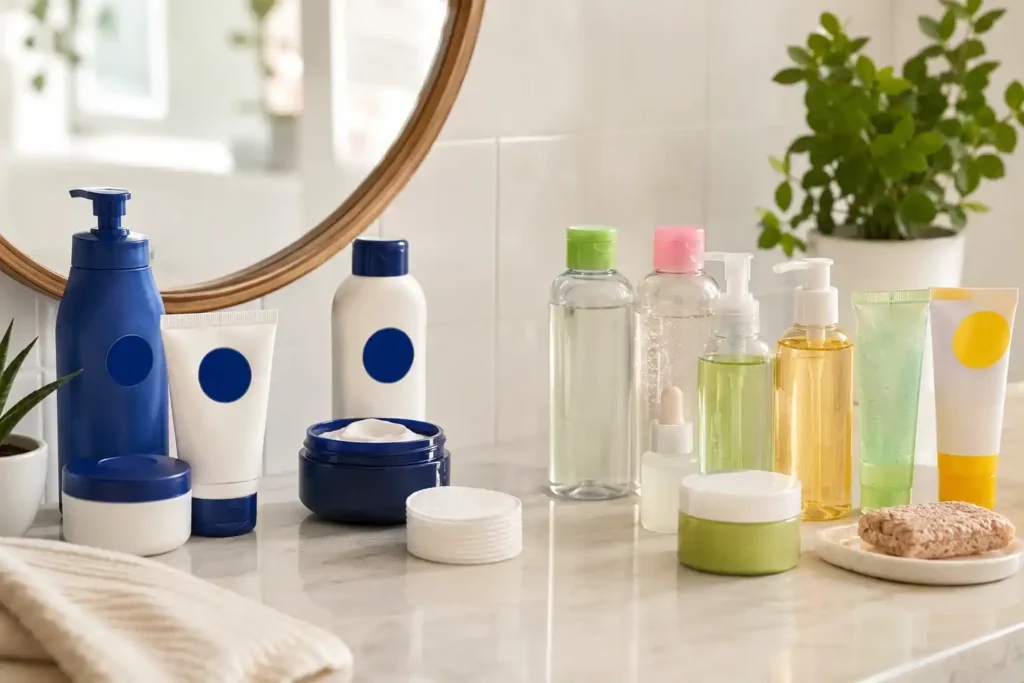

Starting a skincare routine can feel unnecessarily complicated. Stores are filled with cleansers, toners, creams, serums, masks, exfoliants, and sunscreens, all promising different results. Beginners may feel that they need several products before they can properly care for their skin.
In reality, an effective starter routine can be very simple. Most beginners need only a gentle cleanser, a suitable moisturizer, and broad-spectrum sunscreen. The American Academy of Dermatology recommends a mild cleanser and a broad-spectrum, water-resistant sunscreen with an SPF of at least 30 as core parts of a basic routine.
So, is Nivea a good starting brand compared to Garnier? Yes, Nivea can be a sensible starting brand, particularly for people with normal or dry skin who want straightforward moisturizing products. Garnier may be more appealing to beginners interested in micellar water, lightweight cleansers, brightening ingredients, or products designed for oily and blemish-prone skin.
Neither brand is automatically better for everyone. The right choice depends on your skin type, sensitivity, concerns, climate, and the exact product formula.
The Simple Answer
Choose Nivea when your main goal is basic cleansing, moisture, and sun protection. Choose Garnier when you want lighter textures, micellar cleansing, or products aimed at concerns such as excess oil, dullness, and dark marks.
Nivea has a long history of producing face, body, lip, and sun-care products. Its range includes classic rich creams as well as modern cleansers, lighter moisturizers, sensitive-skin products, and high-SPF facial sunscreens.
Garnier also offers broad skincare ranges, but it is particularly well known for micellar cleansing waters and concern-focused lines containing ingredients such as vitamin C, niacinamide, hyaluronic acid, and salicylic acid. Its product selection varies between countries.
A beginner does not need to commit to one brand. You can use a Garnier cleanser, a Nivea moisturizer, and a sunscreen from either company if those individual products suit your skin.
What Beginners Need
A beginner routine should protect the skin barrier instead of overwhelming it. Adding numerous active ingredients at once can make it difficult to identify which product is helping and which one is causing dryness, stinging, breakouts, or redness.
Begin with three steps:
Cleanse to remove sweat, excess oil, dirt, makeup, and sunscreen.
Moisturize to reduce dryness and support the skin’s protective barrier.
Use sunscreen during the day to protect exposed skin from ultraviolet radiation.
The American Academy of Dermatology also advises people with acne-prone skin to look for products labelled oil-free or non-comedogenic. People with sensitive skin may benefit from mild, fragrance-free formulas because fragrance can cause irritation for some users.
Toners, scrubs, masks, eye creams, and multiple serums are optional. They should not take priority over a cleanser, moisturizer, and sunscreen.
Nivea’s Strengths
Nivea is a practical option for beginners who prefer familiar, widely available products and a routine focused on moisture.
The company offers face washes, micellar waters, creams, day moisturizers, night creams, and facial sunscreens. Its cleansing range includes formulas aimed at dry, normal, sensitive, and blemish-prone skin.
Nivea’s richer creams may suit people whose skin feels tight, rough, or dry, particularly in cold weather. Nivea Creme is marketed as an intensive multipurpose moisturizer, while Nivea Soft has a lighter, more easily spread texture for the face, hands, and body.
The brand also has several SPF 50 and SPF 50+ face products, including lighter and sensitive-skin options.
However, some Nivea creams may feel too rich for oily or acne-prone faces. A product being suitable for the body does not guarantee that every person will enjoy using it on the face.
Garnier’s Strengths
Garnier may be the more convenient starting point for people who wear makeup or sunscreen and want an easy first cleansing step.
Its micellar waters are designed to lift makeup, oil, and surface impurities using micelles. Some versions are made for sensitive skin, waterproof makeup, dull skin, dehydration, or blemish-prone skin.
Garnier also offers gel, cream, and foaming cleansers. The company explains that cream cleansers may suit dry skin, while foaming and gel formulas are often directed toward normal, oily, or acne-prone skin.
Its ranges frequently emphasize recognizable ingredients. Depending on the market, these can include vitamin C derivatives, niacinamide, salicylic acid, and hyaluronic acid. Garnier’s UK range, for example, includes a brightening serum containing vitamin C-related ingredients and niacinamide.
The drawback is that concern-focused products can tempt beginners to introduce too many active formulas simultaneously. Start with basic products before adding a serum.
Cleansers
Both brands can provide a suitable beginner cleanser, but the best format depends on your skin.
Nivea’s caring cream cleansers are likely to appeal to people with dry or sensitive-feeling skin. Its Caring Cleansing Cream, for example, is positioned for dry and sensitive skin.
Garnier is particularly strong in micellar water. A standard micellar water can be helpful for removing light makeup or sunscreen without aggressive rubbing. Garnier states that heavier or long-wearing makeup may require micellar water followed by a water-based cleanser.
Micellar water does not have to replace a regular face wash. Some people use it as the first step of an evening double cleanse and then rinse with a gentle cleanser.
Whichever brand you choose, avoid washing with very hot water or scrubbing the skin harshly. A cleanser should leave the face comfortable, not painfully tight or squeaky.
Moisturizers
Nivea has an advantage when it comes to simple, widely recognized moisturizing creams. Its classic products range from rich Nivea Creme to the lighter Nivea Soft.
People with dry skin may appreciate a richer texture, especially at night. Those with normal or combination skin may prefer a lighter lotion or gel-cream.
Garnier’s moisturizers are often organized around particular concerns, such as dehydration, dullness, or oiliness. This can be useful when you already understand your skin, but the labels may feel confusing to a complete beginner.
Do not choose a moisturizer only because it contains a fashionable ingredient. Texture and comfort matter. A suitable moisturizer should absorb reasonably well, relieve dryness, and avoid causing persistent burning, itching, or clogged pores.
For acne-prone skin, look for the words non-comedogenic or won’t clog pores on the product label.
Sunscreens
Daily sun protection matters more than choosing between the two brand names.
Dermatologists recommend a broad-spectrum, water-resistant sunscreen with SPF 30 or higher when you will be outdoors. It should be applied after other skincare products and before makeup.
Nivea offers a particularly extensive sun-care range, including SPF 50 and SPF 50+ products made specifically for the face. Some options are described as lightweight or suitable for sensitive skin.
Garnier also sells high-protection facial products in some markets, including SPF 50+ fluids. Availability and formula names vary by country.
The better sunscreen is the one you can apply generously and consistently. Consider whether it feels comfortable, works with your moisturizer, leaves a visible cast, stings your eyes, or becomes excessively greasy.
Do not rely on an SPF 15 moisturizer as your only protection when stronger sun protection is appropriate.
Dry Skin
Nivea is often the easier starting choice for dry skin because the brand offers several rich creams and cream-based cleansers.
A basic dry-skin routine could include:
Morning: Rinse or use a gentle cream cleanser, apply moisturizer, and finish with SPF 30 or higher.
Evening: Cleanse gently and apply a slightly richer moisturizer.
Nivea Creme may work well on very dry areas, but it can feel heavy on the entire face. Nivea Soft has a lighter texture and may be easier for beginners to wear during the day. Nivea describes the two products differently: the original cream provides richer care, while Soft spreads more easily and offers lighter moisture.
Garnier can still suit dry skin. Its cream cleansers and hyaluronic aloe micellar products are examples of lighter, hydration-focused options.
Oily Skin
People with oily skin should not automatically avoid moisturizer. Stripping the face with harsh cleansers can make it feel irritated without solving the underlying concern.
Garnier may have a slight advantage for oily-skin beginners because it offers more visibly targeted gel cleansers, micellar waters, and salicylic-acid products in many markets.
Still, salicylic acid does not need to appear in every step. Using a salicylic-acid cleanser, exfoliating toner, treatment serum, and drying mask together can irritate the skin.
A beginner with oily skin can use:
Morning: Gentle cleanser, lightweight non-comedogenic moisturizer, and sunscreen.
Evening: Cleanser, moisturizer, and one targeted acne product only when needed.
Nivea also offers blemish-control cleansers and facial sunscreens, so oily skin does not rule the brand out.
Sensitive Skin
Neither brand is automatically safe for every sensitive face.
Sensitive skin may react to fragrance, certain preservatives, botanical extracts, alcohol, or active ingredients. The American Academy of Dermatology advises choosing mild, fragrance-free products when sensitivity is a concern.
Nivea sells products specifically labelled for sensitive skin, including micellar water, day cream, night cream, and high-SPF facial sunscreen.
Garnier’s standard pink micellar water is marketed for sensitive skin and has been tested around sensitive skin and eyes. That does not guarantee that every individual will tolerate it, but it may provide a straightforward makeup-removal option.
Check the complete ingredient list rather than relying only on the words “gentle” or “sensitive.”
Ingredients
Beginners do not need to memorize every ingredient, but understanding a few categories can make shopping easier.
Humectants, such as glycerin and hyaluronic acid, attract water and support hydration.
Emollients soften the skin and improve its texture.
Occlusives reduce moisture loss by creating a protective layer. Rich creams usually contain more occlusive ingredients than lightweight gels.
Niacinamide is commonly used in products intended to support the skin barrier, manage oiliness, and improve uneven-looking tone.
Salicylic acid is often included in products for oily or acne-prone skin because it can help clear material within pores.
Vitamin C and its derivatives appear in brightening and antioxidant products, but formulas differ considerably in strength and stability.
A product containing more active ingredients is not necessarily better. For beginners, simple and comfortable usually beats complicated and aggressive.
Drawbacks
Nivea’s biggest possible drawback is the richness and fragrance found in some classic formulas. A thick multipurpose cream may feel excellent on dry hands but greasy or congesting on an oily face.
Garnier’s concern-based ranges may include stronger cleansing agents, fragrance, or active ingredients that are unnecessary for a simple routine. A beginner may also buy several products from the same brightening or acne range and introduce them all at once.
Formula names and ingredients vary between countries. Always inspect the label on the product available in your region rather than assuming it matches a review published elsewhere.
Neither brand should be expected to treat severe acne, eczema, rosacea, allergic reactions, or persistent pigmentation without professional guidance.
Morning Routine
A beginner’s morning routine can remain short.
Step one: Cleanse lightly. People with oily skin may prefer a gentle face wash. People with dry skin may only need a water rinse or mild cream cleanser.
Step two: Moisturize. Choose a texture suitable for your skin. Apply a thin, even layer.
Step three: Apply sunscreen. Use broad-spectrum SPF 30 or higher on the face, ears, neck, and other exposed areas. Reapply when necessary, especially after sweating or swimming.
You do not need a vitamin C serum, toner, facial mist, and eye cream to make this routine effective.
Evening Routine
The evening routine should remove the day’s sunscreen, makeup, dirt, and excess oil.
Step one: Remove makeup and sunscreen. Garnier micellar water can be useful here, although Nivea also offers micellar products.
Step two: Wash the face. Follow with a gentle cleanser when you have worn heavy sunscreen, makeup, or water-resistant products.
Step three: Moisturize. Use a light cream or richer product depending on your skin.
Once your skin has tolerated this routine for several weeks, you may add one targeted treatment. Introduce it slowly and avoid starting multiple active products on the same day.
Patch Testing
Before applying a new product across your face, test a small amount on a limited area of skin. This is especially helpful when you have a history of sensitivity.
Use only one new product at a time. If you introduce a cleanser, moisturizer, serum, and sunscreen together, you may not know which one caused a reaction.
Stop using a product if it causes persistent burning, swelling, hives, blistering, or severe itching. Seek medical advice for a serious or continuing reaction.
Temporary mild tingling from some active ingredients can occur, but pain should not be treated as evidence that a product is working.
Which Brand Is Better?
For a person asking, “I’m a skincare beginner—is Nivea a good starting brand compared to Garnier?”, the fairest answer is that both can work, but they serve slightly different starting preferences.
Nivea may be better for:
- Normal or dry skin
- Straightforward moisturizing
- Rich creams
- Face and body products
- A broad selection of sunscreens
- People who prefer a traditional, uncomplicated routine
Garnier may be better for:
- Micellar cleansing
- Makeup and sunscreen removal
- Lightweight textures
- Oily or combination skin
- Brightening products
- Concern-focused ingredients
Your skin does not care whether every bottle has the same logo. Select each product according to its formula and purpose.
Final Verdict
Nivea is a good starting skincare brand, but it is not automatically better than Garnier. Nivea is particularly useful for simple moisturizing and sun-care routines, while Garnier offers convenient micellar cleansers and a wider selection of visibly concern-focused products in many markets.
A sensible beginner routine might combine Garnier micellar water, a gentle cleanser, a Nivea moisturizer, and a comfortable high-SPF sunscreen. Another person may prefer the opposite combination.
Begin with the basics, introduce one product at a time, and pay attention to how your skin responds. Consistent use of a gentle cleanser, suitable moisturizer, and sunscreen is more valuable than owning a large collection of products.
FAQs
Is Nivea suitable for a skincare beginner?
Yes. Nivea offers basic cleansers, moisturizers, and sunscreens that can fit a simple routine. Choose a product designed for your skin type rather than starting with the richest cream automatically.
Is Garnier better than Nivea for oily skin?
Garnier may offer more lightweight and blemish-focused options, including gel cleansers and salicylic-acid products. However, Nivea also has products for blemish-prone skin. The formula matters more than the brand name.
Can I use Nivea and Garnier together?
Yes. Skincare products do not need to come from one brand. You can use a Garnier cleanser with a Nivea moisturizer and sunscreen when each product suits your skin.
Is Nivea Creme suitable for the face?
Nivea Creme is marketed for the face, body, and hands, but its rich texture may feel heavy on oily or acne-prone skin. Dry skin may tolerate it better, particularly on rough areas.
What should a beginner buy first?
Start with a mild cleanser, a simple moisturizer, and broad-spectrum SPF 30 or higher. Add serums, exfoliants, or acne treatments only after your basic routine feels comfortable.