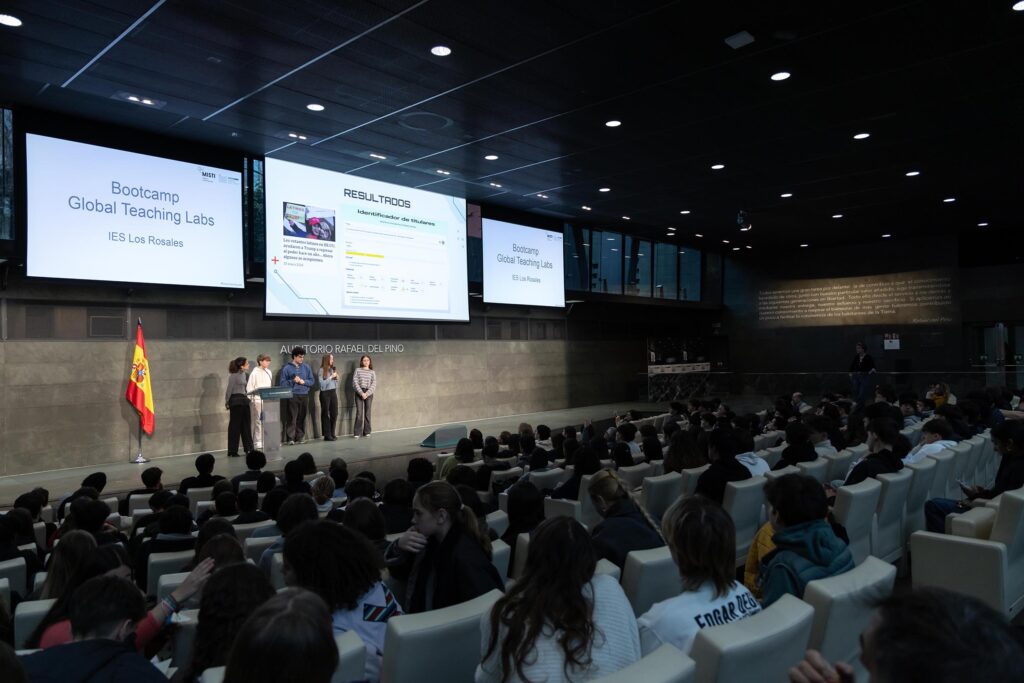

Global Teaching Labs (GTL) is an international educational program operated through the Massachusetts Institute of Technology’s International Science and Technology Initiatives (MISTI). The program gives selected MIT students an opportunity to travel abroad and teach students in other countries.
Rather than treating international education simply as classroom study, GTL follows a “learn by teaching” philosophy. MIT students are expected to share their knowledge while also learning from different educational systems, cultures and communities.
The program primarily focuses on science, technology, engineering and mathematics (STEM). Depending on the country and year, opportunities can also include entrepreneurship, debate, artificial intelligence and other subjects.
What Are Global Teaching Labs?
Global Teaching Labs is a short-term international teaching program for selected MIT students. Participants generally travel abroad during MIT’s Independent Activities Period (IAP) in January.
According to MIT, GTL programs normally run for approximately three to four weeks and place students in schools or educational settings abroad. Participants may teach high school or university students, depending on the specific country program.
The central idea is simple: students strengthen their own understanding by teaching what they know to others.
This approach requires participants to organize knowledge, communicate clearly, adapt lessons to their audience and work effectively with people from different cultural backgrounds.
The MIT Connection
Global Teaching Labs operates through MISTI, MIT’s international education initiative. MISTI supports a wide range of international experiences, including internships, research placements and teaching opportunities.
MIT describes GTL as an experiential opportunity in which students share the Institute’s approach to science and engineering education while gaining international experience themselves.
The program has existed for many years. An MIT News article published in 2015 reported that nearly 150 MIT students were traveling abroad through GTL during the January period at that time.
The program has since expanded into numerous countries and subject areas.
How It Works
The basic structure is different from a conventional study-abroad program. Instead of primarily attending classes, participants are selected to teach and engage directly with students in a host country.
Before departure, participants complete preparation and training. MIT says this includes teaching materials, communication techniques and information about the education system and culture of the host country.
Once abroad, students may teach independently or as part of a team, depending on the specific program.
The exact teaching schedule, accommodation and classroom structure vary from one country to another. This is why applicants are encouraged to examine the individual country program before applying.
Subjects
STEM is at the heart of Global Teaching Labs. Depending on the location and academic year, participants may teach mathematics, physics, chemistry, biology, computer science, robotics and other technical subjects.
Some programs also include subjects beyond traditional STEM. Current MIT information lists opportunities involving entrepreneurship, debate, artificial intelligence, machine learning, data analysis and sustainability, among others.
This variety means the program can accommodate students with different academic backgrounds, although available subjects depend on the country.
Countries
GTL has a broad international reach. Current program information lists opportunities across Africa, Asia, Europe, Eurasia and Latin America.
The 2027 program information includes locations such as Angola, Cape Verde, Ghana, Rwanda, South Africa and Botswana in Africa; India, Bhutan and Korea in Asia; and Germany, Italy, Spain, Portugal, Kazakhstan and the United Kingdom in Europe and Eurasia. Latin American opportunities include Mexico, Peru and Uruguay.
The exact list of countries and subjects can change from year to year.
For example, MIT’s current information identifies India as offering all STEM-related subjects and entrepreneurship, while Peru and Uruguay have opportunities related to AI, machine learning and data communication.
Eligibility
Global Teaching Labs is selective. MIT’s current program information states that applicants need to be in good academic standing with a minimum 4.0 GPA. Applicants also submit a MISTI application and complete an interview.
Academic performance is only one part of the selection process.
MIT also considers subject knowledge, communication ability, adaptability, leadership, teaching potential, interest in the host country and cultural awareness.
Some country programs have additional requirements, including language skills or previous teaching experience.
Selection
The selection process is designed to identify students who can handle both the academic and cultural demands of the program.
A strong candidate needs more than good grades. Participants may have to explain complex concepts to students with different backgrounds, manage classroom activities and adjust their teaching style when something does not work as planned.
MIT specifically lists the ability to communicate and inspire about STEM concepts, lead a class, mentor individuals and adapt to different cultural and living arrangements among its selection considerations.
Training
Preparation is an important part of GTL. Selected students attend pre-departure training sessions before traveling.
Program-wide preparation covers teaching and communication strategies. Country-specific preparation addresses areas such as culture, health and safety, logistics and local expectations.
This preparation matters because teaching abroad requires more than subject expertise.
A lesson that works well in one educational environment may need significant adjustment in another. Understanding students and their cultural context helps participants create more effective learning experiences.
Funding
One of the major practical advantages of GTL is its funding structure.
MIT states that MISTI programs are designed to be cost-neutral, with funding coming from donors, host schools or a combination of sources. For GTL, essential expenses such as airfare and housing are covered, and participants receive a small stipend for meals and transportation.
Exact arrangements can differ between programs, so students should check the details for their selected country.
The funding model makes international teaching more accessible to eligible MIT students who might otherwise find overseas educational experiences expensive.
Benefits for Students
One of the clearest benefits is the opportunity to develop teaching and communication skills.
Knowing a subject is different from explaining it successfully. GTL participants must break complex ideas into understandable concepts, answer questions and adapt explanations according to their students’ needs.
The program can also strengthen leadership, teamwork and problem-solving abilities.
Because participants live and work in another country, they gain practical experience that cannot easily be reproduced in a conventional classroom.
Cultural Learning
Cultural exchange is one of GTL’s defining characteristics.
Participants work with students and educators from different educational and cultural backgrounds. This requires openness, patience and flexibility.
MIT describes the program as an opportunity to communicate with peers from different cultural backgrounds while sharing its approach to science and engineering education.
The experience can therefore change how participants think about teaching, learning and international collaboration.
Benefits for Host Students
The program is not only designed to benefit MIT students.
Host students gain access to instructors from one of the world’s leading technology and research universities. They may encounter new approaches to science, engineering, mathematics and technology.
The teaching format often emphasizes hands-on and experiential learning, rather than relying entirely on traditional lectures. MIT’s Africa program, for example, describes GTL as introducing high school students abroad to MIT’s lab-based approach to learning.
This can give students an opportunity to experiment with concepts in ways that complement their regular curriculum.
Teaching Style
GTL places considerable emphasis on active learning.
Depending on the country and subject, students may participate in workshops, practical exercises, demonstrations, discussions or project-based activities.
The precise format varies. For example, MIT’s Italy program states that teaching is conducted in English and emphasizes experiential learning, while students teach at public high schools under the supervision of host teachers.
This demonstrates why applicants need to research their specific destination rather than assuming that every GTL program operates identically.
Program Timeline
The program generally follows a predictable annual cycle.
For the current GTL 2027 cycle, MIT lists an application opening date of September 2, 2026, a priority deadline of September 21, 2026, and a final deadline of September 23, 2026. Interviews and application reviews take place afterward, followed by preparation during November and December. Most programs take place during the final three weeks of January.
Participants also attend a mandatory re-entry session after returning to MIT.
Because dates can change, prospective applicants should always verify the current schedule directly with MISTI.
How to Apply
Students interested in GTL apply through the MISTI portal.
MIT’s current guidance allows applicants to select a first and second country choice. Students can also express interest in additional countries after selecting their primary preferences.
Applicants should review the country-specific requirements carefully.
Important considerations include:
- Academic requirements
- Subject expertise
- Language ability
- Teaching experience
- Country preferences
- Cultural adaptability
- Availability during January
- Ability to attend required training
Students without a valid passport are also advised to apply for one as soon as possible if they are considering international participation.
Country Differences
One of the most important things to understand about Global Teaching Labs is that there is no single classroom model used everywhere.
In Italy, for example, MIT students may teach at public high schools, work under host-teacher supervision and live with host families.
In Wales, the program is a partnership involving the Welsh Government, MISTI UK and Equal Education. MIT students support science and mathematics departments through lessons, workshops and other educational activities.
Spain offers another example, with opportunities in subjects such as physics, chemistry, mathematics, biology, computer science and robotics.
These differences are part of what makes GTL a flexible international program.
Challenges
Despite its benefits, teaching abroad is not always easy.
Participants may need to adjust to different classroom expectations, communication styles, living arrangements and cultural norms. Teaching in a new environment can also require significant preparation.
Language may be another consideration. Some programs have specific language preferences or requirements, while others conduct classes in English.
Students must also be prepared for the responsibility of representing MIT while working with schools and communities abroad.
Global Impact
The program’s impact extends beyond individual participants.
An MIT report on its Africa programs describes GTL as an opportunity for MIT students to learn through teaching while introducing students abroad to hands-on science and engineering education. During the 2023 IAP, the Africa program ran teaching labs across multiple countries.
The program can also create longer-term connections between MIT, host schools and local education systems.
One example is Uruguay, where an initiative that began as MIT Global Startup Labs later became part of Global Teaching Labs and contributed to a broader collaboration around machine learning and artificial intelligence for public policy.
Fun Facts
GTL is not a typical study-abroad program. Participants go overseas primarily to teach rather than simply attend classes.
The program operates in many parts of the world. Current MIT information lists opportunities across Africa, Asia, Europe, Eurasia and Latin America.
Teaching subjects vary considerably. Mathematics, physics and computer science may sit alongside robotics, entrepreneurship, debate, AI and data-related subjects.
Some programs involve host families. Others use apartments, hotels or private accommodation, depending on the country and school.
The program has a long history. MIT News was already reporting on GTL’s international teaching activities in 2015.
Important Facts
| Detail | Information |
| Program | Global Teaching Labs |
| Organization | MIT MISTI |
| Main concept | Learn by teaching |
| Primary focus | STEM education |
| Additional subjects | Entrepreneurship, debate, AI, data and others |
| Typical period | January / MIT IAP |
| Typical duration | 3–4 weeks |
| Participants | Selected MIT undergraduate and graduate students |
| Academic requirement | 4.0 GPA minimum under current requirements |
| Selection | Application and interview |
| Training | Pre-departure preparation required |
| Funding | Designed to be cost-neutral |
| Travel | International |
| Host audience | Mainly high school students, with some university programs |
| Program scope | Multiple countries worldwide |
Final Thoughts
Global Teaching Labs is an international education program that combines teaching, cultural exchange and experiential learning. Organized through MIT MISTI, it gives selected students an opportunity to take their academic knowledge beyond the university classroom and use it in schools abroad.
The program benefits both sides. MIT students develop communication, leadership, teaching and cultural skills, while host students gain exposure to new approaches to STEM education.
Its international scope is another major strength. From mathematics in Bhutan and Ghana to AI-related opportunities in Peru and Uruguay, the program adapts to the educational priorities of individual countries.
FAQs
What is Global Teaching Labs?
Global Teaching Labs is an MIT MISTI program that sends selected MIT students abroad to teach STEM and other subjects during the January Independent Activities Period.
Who can apply to Global Teaching Labs?
The program is primarily intended for eligible MIT undergraduate and graduate students. Current requirements include good academic standing, a minimum 4.0 GPA, an application and an interview.
What subjects are taught?
Participants may teach mathematics, physics, chemistry, biology, computer science, robotics, AI, entrepreneurship, debate and other subjects, depending on the country.
Does MIT fund Global Teaching Labs?
Yes. MIT states that MISTI programs are designed to be cost-neutral, with essential expenses such as airfare and housing covered through program funding, donors and host organizations. Participants also receive a small stipend for meals and transportation.
How long does Global Teaching Labs last?
Most GTL programs run for approximately three to four weeks during January. The exact dates and structure depend on the country program.