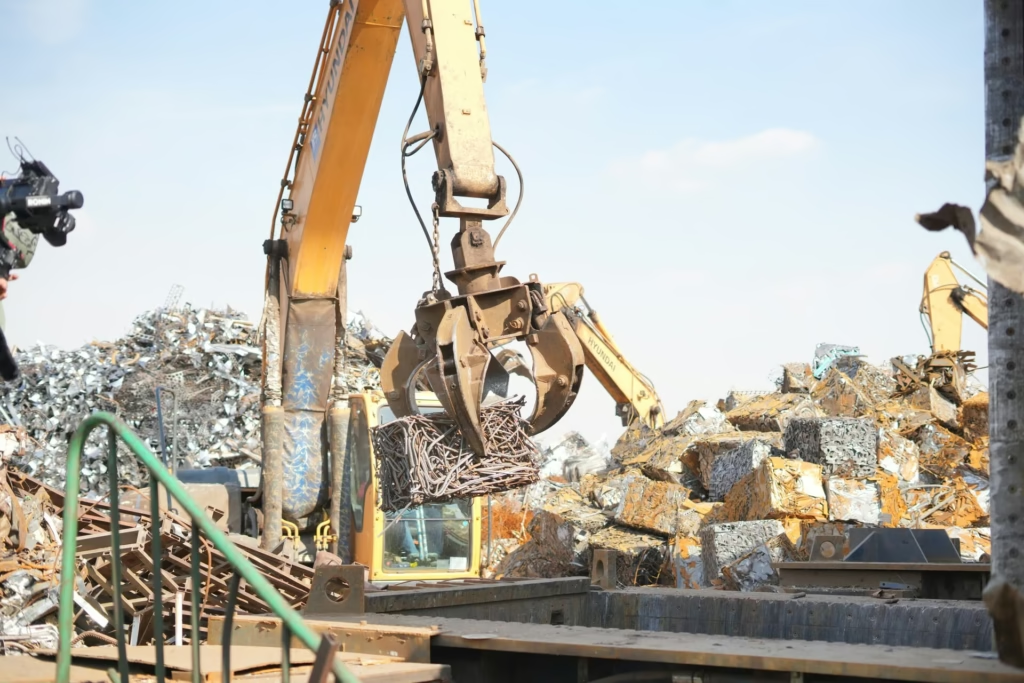

The Warwick Ward construction firm collapse sent shockwaves through the UK’s construction and recycling industries in late 2025. Founded in 1970 by Warwick Ward, the business had grown to become one of the largest stockists and suppliers of new and used earthmoving and waste recycling equipment in the UK. After more than five decades of steady operation, the company entered administration, leaving employees without jobs and the industry questioning what went wrong. This article examines the key events, causes, and consequences of one of the year’s most significant business collapses.
A Legacy Built Over Five Decades
Warwick Ward (Machinery) Ltd operated from headquarters in Barnsley, with additional depots in Bromsgrove and Harlow. Machinery manufacturers it represented included Case, Terex, Ausa, Faresin, and Sunward. The firm’s broad geographic footprint and diverse product range made it a trusted partner for construction, demolition, and recycling projects across the country. For over 50 years, it maintained a reputation for reliability and scale, cementing its position as a market leader in a highly competitive sector.
The Ownership Transition That Changed Everything
In June 2023, owner-directors Ashley and Matt Ward sold the company to an employee ownership trust. In its last year of ownership under the Wards, it made a pre-tax profit of £679,000 on sales of £51.2 million. its first year under employee ownership, it sank to a pre-tax loss of £1.3 million, with sales revenue falling 11% to £45.3 million. This dramatic reversal raised immediate concerns about the viability of the new ownership model and its ability to weather the prevailing economic climate.
The Role of Debt in the Firm’s Downfall
Joint administrator James Lumb offered a candid assessment of the structural pressures created by the ownership change. He noted that employee ownership trusts can often be highly successful, creating an exit route for shareholders while bringing long-term operational and cultural advantages. However, the additional debt many such companies take on as part of the sale can prove to be a burden further down the line, particularly if trading conditions become difficult. In Warwick Ward’s case, that debt compounded the challenge at the worst possible time.
Economic Headwinds Across Construction and Recycling
Rising borrowing costs, persistent inflation, and reduced capital investment combined to squeeze margins across the supply chain, particularly for plant dealers dependent on large-scale project demand. Construction output struggled to regain momentum, with delayed infrastructure projects and cautious private-sector spending weighing heavily on equipment suppliers. The waste recycling sector added further strain, with regulatory complexity and volatile material prices tightening cash flow for firms operating across both markets simultaneously.
Last-Ditch Efforts to Survive
Before entering administration, Warwick Ward’s leadership explored every available option. Administrators confirmed the company explored a range of options in an effort to secure its future, including attempts to refinance existing borrowing. The firm also sought potential buyers and fresh investment. Despite these efforts, no viable solution was found that could prevent the collapse. The failure to secure bridge financing or attract a buyer ultimately left administration as the only remaining path forward for the business.
The Human Cost: 89 Jobs Lost
With nearly all of the firm’s 89 employees made redundant at the start of the festive period, the closure highlighted the human cost of financial distress in the construction sector. In addition to its main Yorkshire base, Warwick Ward Machinery operated sites in Bromsgrove, Worcestershire, and Harlow, Essex. Workers across all three locations were affected, making this one of the most impactful regional employer collapses of the year. The timing — just before Christmas — amplified the hardship faced by those suddenly left without income.
What This Means for the UK Construction Sector
Warwick Ward’s collapse is being widely viewed as a symptom of deeper structural challenges facing UK construction and recycling businesses. The firm’s failure illustrates how even long-established companies with strong histories are vulnerable when debt obligations meet sustained economic pressure. Industry observers warn that other mid-sized firms operating on thin margins face similar risks, particularly those that have undergone recent ownership transitions or carry significant refinancing exposure in a high-interest-rate environment.
FAQs
What is Warwick Ward (Machinery) Ltd?
Warwick Ward (Machinery) Ltd was a UK-based construction equipment supplier founded in 1970. It was one of Britain’s largest stockists of earthmoving and waste recycling equipment, operating from headquarters in Barnsley with depots in Worcestershire and Essex.
Why did the Warwick Ward construction firm collapse?
The collapse resulted from a combination of factors: mounting debt taken on during the 2023 transition to employee ownership, a sharp decline in revenue, and broader economic pressures affecting the UK construction and waste recycling sectors, including rising borrowing costs and reduced capital investment.
How many employees lost their jobs?
All 89 of the company’s employees were made redundant following the administration appointment, affecting workers across its sites in Yorkshire, Worcestershire, and Essex.
What is an employee ownership trust (EOT)?
An EOT is a structure that allows a company to be sold to its employees collectively. While EOTs can deliver long-term cultural and operational benefits, the debt often taken on to fund the purchase can become unsustainable if trading conditions deteriorate.
Could the collapse have been prevented?
Administrators confirmed that the company attempted refinancing, sought buyers, and explored fresh investment before entering administration. However, no viable solution was found in time to prevent insolvency.
Conclusion
The Warwick Ward construction firm collapse is a cautionary story about the intersection of ownership transition risk and broader economic fragility. A firm that had traded profitably for over five decades found itself overwhelmed by debt, falling revenue, and sector-wide pressures within just two years of changing hands. The loss of 89 jobs underscores the very real human consequences of corporate insolvency. For the UK construction industry, the collapse serves as a stark reminder that financial resilience, prudent debt management, and adaptability are not optional — they are essential for long-term survival.